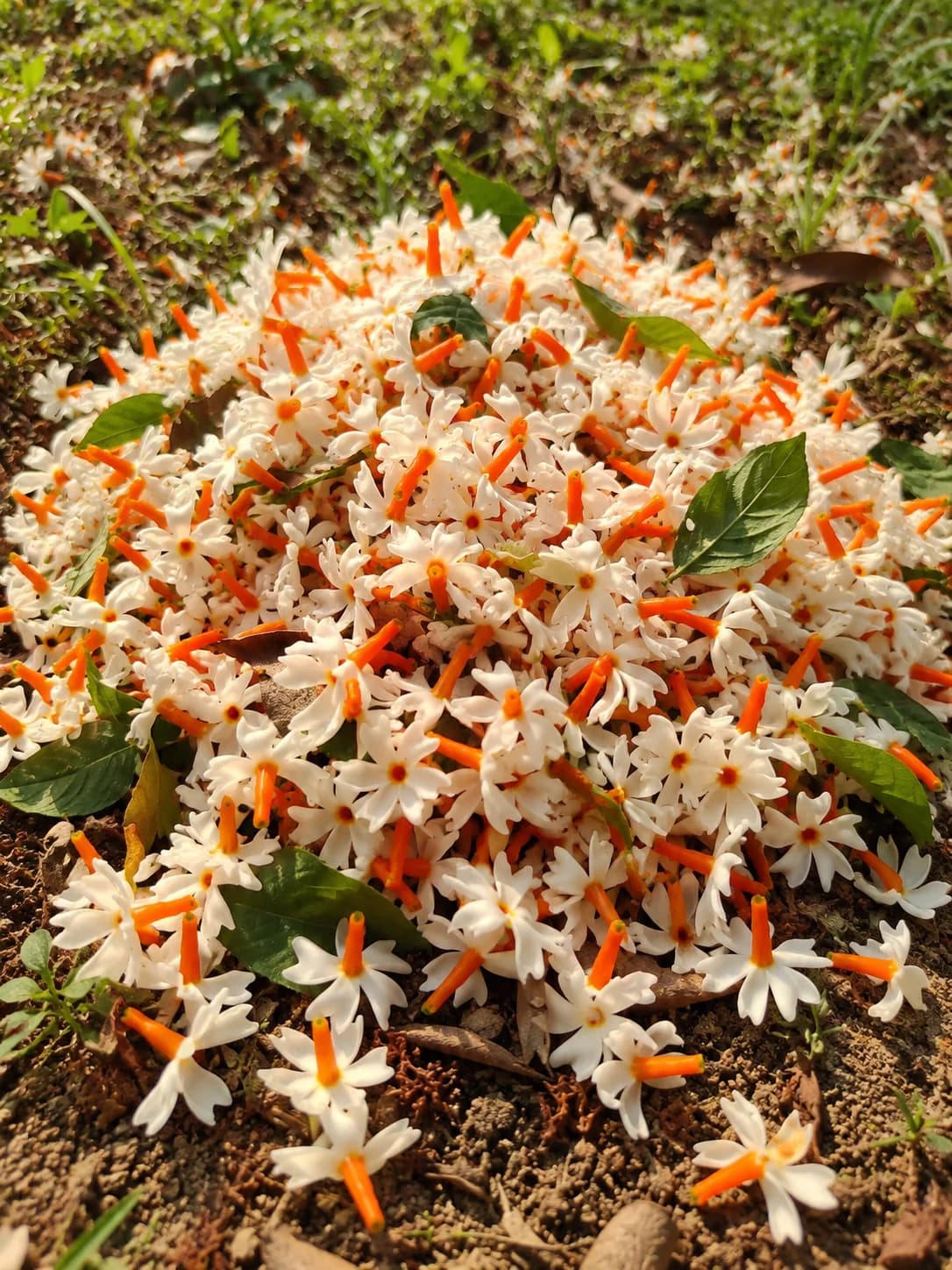
Harsingar (Nyctanthes arbor-tristis), also known as Parijat or Night Jasmine, is a distinctive flowering plant treasured for its delicate white petals, orange centres and fragrant blooms. When people search for Harsingar flower benefits, they may be interested in its botanical significance, traditional uses or unique fragrance. Different parts of the plant have been studied for their chemical constituents and potential biological activities, but traditional use should not be confused with proven medical effectiveness. For reliable botanical background, explore this scientific review of Harsingar's extraction methods and properties.
One particularly interesting aspect of Harsingar is its fragrance potential. Research has investigated its essential oil and aromatic composition, while reported oil yields vary considerably with the plant material and extraction method. This makes laboratory evaluation an important step before attempting larger-scale production. At Kannauj Attar, we are exploring Harsingar flowers through preliminary oil-yield testing before moving towards traditional Deg-Bhapka distillation. The goal is to understand the material and evaluate its suitability for developing Harsingar attar and Harsingar floral water. Learn more about our Harsingar oil-yield testing process and our Harsingar flower attar and floral-water development journey.
The appeal of Harsingar lies in the connection between a memorable flower, its natural aroma and the craftsmanship involved in exploring its fragrance. A flower-derived fragrance can be especially interesting to people who appreciate botanical ingredients and traditional Indian perfumery, although the final aroma and availability depend on the actual extraction results. At Kannauj Attar, we believe fragrance development should be approached with patience, appropriate testing and transparent product information. If you appreciate distinctive floral aromas, explore our Kannauj Attar collection and follow our Harsingar project as testing progresses. For further botanical research, see the PubMed literature on Nyctanthes arbor-tristis.